AI and the Future of Work
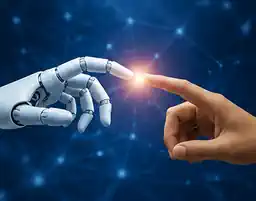
Artificial Intelligence is no longer a technology that belongs only in science fiction movies or research laboratories. Today, AI has become part of daily life and is rapidly transforming the way people work across nearly every industry. From automated customer service systems and intelligent virtual assistants to advanced data analysis and content generation tools, artificial intelligence is changing how businesses operate and how employees perform their jobs.
Some people see AI as an exciting innovation that can increase productivity and create opportunities. Others worry that intelligent machines could replace millions of jobs. The reality is more complex. AI is not simply about replacing humans; it is also about changing the nature of work itself.
Understanding Artificial Intelligence
Artificial Intelligence refers to computer systems that can perform tasks that normally require human intelligence. These tasks include recognizing patterns, understanding language, solving problems, learning from experience, and making decisions.
Modern AI systems process enormous amounts of information in a short period of time. They can identify trends that humans might miss and complete repetitive tasks much faster than traditional methods.
Examples of AI technologies already used in workplaces include:
- Chatbots for customer support
- Virtual assistants
- Automated scheduling systems
- Data analysis software
- Image recognition systems
- Content creation tools
- Predictive business analytics
Many people interact with AI every day without realizing it. Recommendation systems on streaming platforms, smart navigation apps, and online shopping suggestions are all examples of artificial intelligence at work.
How AI Is Changing the Workplace
The workplace has changed many times throughout history. During the Industrial Revolution, machines transformed manufacturing. Computers later changed offices and communication. Today, AI represents another major shift.
One of the biggest changes AI brings is automation. Automation allows systems to perform repetitive and time-consuming tasks without constant human involvement.
For example, accounting software can process invoices automatically, customer service systems can answer common questions instantly, and manufacturing robots can operate continuously with high precision.
By reducing repetitive work, employees can focus on more valuable activities that require creativity, strategic thinking, and human interaction.
Industries Already Being Transformed by AI
Healthcare
Healthcare is experiencing major improvements through artificial intelligence. AI systems can analyze medical images, assist doctors with diagnoses, and predict potential health risks.
Medical professionals still make final decisions, but AI can help them work faster and more accurately.
For example, AI can detect certain abnormalities in scans that may otherwise be difficult to identify quickly.
Finance
Banks and financial institutions use AI to detect fraud, evaluate risks, and provide personalized recommendations.
Algorithms can analyze thousands of transactions within seconds and identify unusual activity that may indicate fraudulent behavior.
Financial advisors also use AI tools to analyze market trends and improve decision-making.
Retail
Retail companies use AI to understand customer behavior and improve shopping experiences.
Online stores recommend products based on customer preferences, purchase history, and browsing activity.
Inventory systems can also predict demand and reduce waste.
Manufacturing
Factories increasingly rely on smart machines and robotics powered by AI.
These systems improve efficiency, reduce production errors, and increase safety.
Predictive maintenance systems can identify equipment problems before machines fail, saving businesses both time and money.
Education
Educational institutions use AI to personalize learning experiences.
Students can receive customized lessons based on their learning speed and performance.
Teachers can also use AI tools to reduce administrative work and spend more time supporting students.
Will AI Replace Human Jobs?
This is one of the most common questions people ask.
The concern is understandable because automation has historically changed employment patterns. Certain jobs that involve repetitive and predictable tasks are more vulnerable to automation.
Examples may include:
- Basic data entry positions
- Some customer support roles
- Routine manufacturing tasks
- Simple administrative work
- Repetitive processing jobs
However, technology has also created new careers throughout history.
Before computers existed, many modern professions did not exist either. Software developers, digital marketers, social media managers, cybersecurity experts, and app designers are relatively new professions.
Similarly, AI is creating entirely new opportunities.
New Jobs Created by AI
As artificial intelligence grows, new job categories are emerging.
Some examples include:
- AI engineers
- Machine learning specialists
- AI ethics consultants
- Prompt engineers
- Data scientists
- Automation specialists
- AI trainers
- Human-AI collaboration experts
Many of these roles did not exist a few years ago.
Organizations increasingly need professionals who understand both technology and human needs.
The Skills That Will Become More Valuable
As AI handles more routine work, human skills may become even more important.
Machines can process information quickly, but they still struggle with many qualities that humans naturally possess.
Future workplaces may place greater value on:
- Creativity
- Critical thinking
- Emotional intelligence
- Leadership
- Communication skills
- Problem-solving abilities
- Adaptability
- Collaboration
For example, AI can generate reports and analyze data, but understanding emotional situations, building trust, and leading teams remain deeply human strengths.
The Importance of Continuous Learning
One of the biggest lessons from technological progress is that learning should never stop.
People who continuously develop new skills often adapt more successfully to changing industries.
Workers in the future may need to update their knowledge regularly as technologies evolve.
Learning no longer requires traditional classrooms only. Today people can access online courses, tutorials, educational platforms, and digital communities.
Small improvements over time can make a significant difference.
Even learning one new skill every year may create major opportunities over a long career.
Remote Work and AI
Artificial intelligence is also changing where people work.
Remote work expanded significantly in recent years, and AI tools continue supporting this transformation.
Smart scheduling systems, virtual meeting assistants, automatic transcription software, and collaboration platforms help teams work together from different locations.
Employees can save commuting time while organizations gain access to global talent.
However, remote work also creates challenges such as communication difficulties and maintaining team culture.
AI may help solve some of these problems through better collaboration technologies.
Ethical Questions About AI
Despite its benefits, AI also raises important ethical concerns.
Questions include:
- How should personal data be protected?
- Can AI systems become biased?
- Who is responsible for AI decisions?
- How transparent should AI systems be?
- What limits should exist?
AI systems learn from data, and if that data contains bias, the system may also produce biased outcomes.
This creates challenges in hiring, finance, healthcare, and law enforcement.
Businesses and governments increasingly recognize the need for ethical guidelines and responsible AI development.
Human and AI Collaboration
Many experts believe the future will not involve humans competing against machines but working alongside them.
Human-AI collaboration may become one of the most powerful combinations in modern workplaces.
AI can process large amounts of information quickly while humans contribute judgment, empathy, creativity, and experience.
For example, doctors can use AI-assisted diagnosis tools while still applying their expertise and understanding patient needs.
Writers can use AI for research and idea generation while maintaining their personal style and creativity.
Designers can use AI-generated concepts while making artistic decisions themselves.
Preparing for the Future
The future of work will likely continue evolving rapidly.
People do not necessarily need to become AI experts to succeed, but understanding how technology works may become increasingly valuable.
Some practical ways to prepare include:
- Developing digital skills
- Improving communication abilities
- Learning how AI tools work
- Remaining adaptable
- Continuing education
- Building creative thinking skills
Fear often appears whenever major technological changes occur. Similar fears existed when computers first entered workplaces.
Over time, many people adapted and discovered new opportunities.